VTE - DVT & PE

Venous Thromboembolism

* Source: Derbyshire Joint Area Prescribing Committee (JAPC)

Download Links
MANAGEMENT

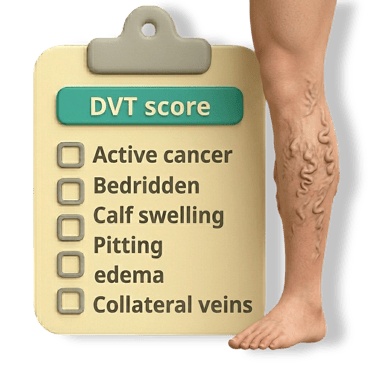
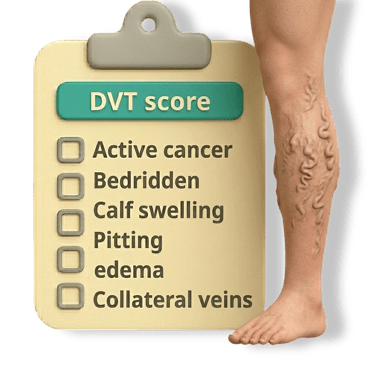
Patients can be divided into “DVT unlikely” and “DVT likely” groups based on Wells score. An additional moderate risk group can be added based on the sensitivity of the d-dimer being used.

  • A score of 0 or lower is associated with DVT unlikely with a prevalence of DVT of 5%.

    • These patients should proceed to d-dimer testing:

      • A negative high or moderate sensitivity d-dimer results in a probability <1 % and no further imaging is required.

      • A positive d-dimer should proceed to US testing.

        • A negative US is sufficient for DVT rule out.

        • A positive US is concerning for DVT; strongly consider treatment with anticoagulation.

  • A score of 1-2 is considered moderate risk with a pretest probability of 17%.*

    • These patients should proceed to high-sensitivity d-dimer testing (moderate sensitivity d-dimer is not sufficient).

      • A negative high-sensitivity d-dimer is sufficient for rule out of DVT in a moderate risk patient with a probability of <1%.

      • A positive high sensitivity d-dimer should proceed to US testing.

        • A negative US is sufficient for ruling out DVT.

        • A positive US is concerning for DVT, strongly consider treatment with anticoagulation.

  • A score of 3 or higher suggests DVT is likely. Pretest probability 17-53%.

    • All DVT likely patients should receive US.

    • D-dimer testing should be utilized to help risk-stratify these DVT-likely patients.

      • In DVT likely patients with negative d-dimer:

        • A negative US is sufficient for ruling out DVT, consider discharge.

        • A positive US should be concerning for DVT, strongly consider treatment with anticoagulation.

      • In DVT likely patients with a positive d-dimer:

        • A positive US should be concerning for DVT, strongly consider treatment with anticoagulation.

        • A negative US is still concerning for DVT. A repeat US should be performed within 1 week for re-evaluation.

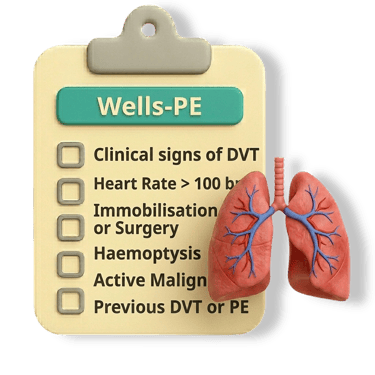
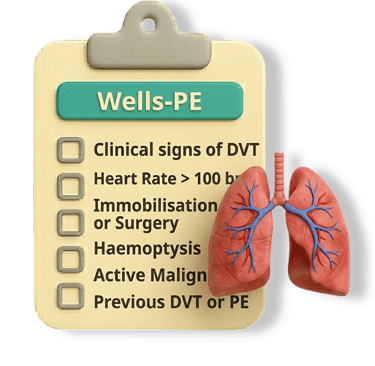
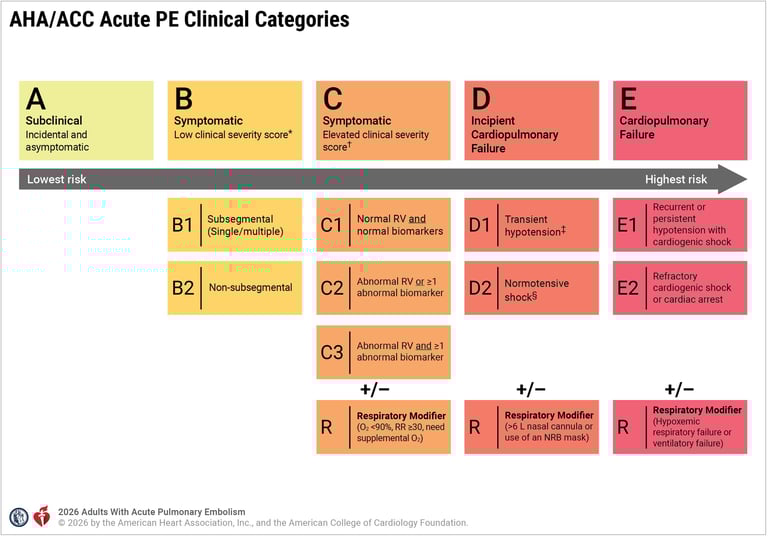
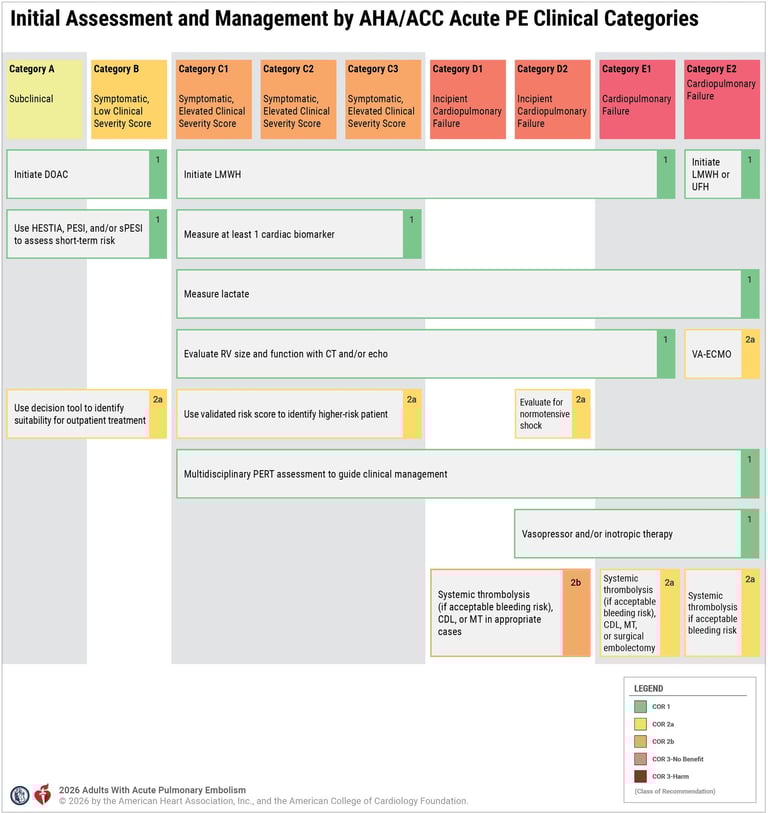
Pulmonary Embolism

Pregnant Patient?

Prescribing LMWH

If, based on VTE risk assessment, a patient is deemed to have a need for pharmacological VTE prophylaxis, the first-line choice of prophylaxis will be a low molecular weight heparin (LMWH).

Body weight, renal function (calculated as creatinine clearance [CrCl] using Cockcroft-Gault equation – eGFR should not be used as it is not equivalent) and individual contraindications/bleeding risk factors should be checked before prescribing.
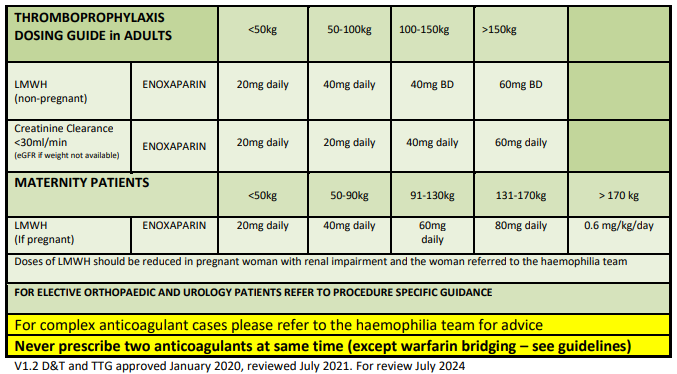
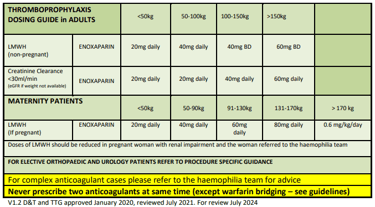
Click the button below to view Enoxaparin Dosing Guide for Prophylaxis of Venous Thromboembolism in Adult Medical and Surgical Patients (non-pregnant) by Gloucestershire Hospitals NHS Foundation Trust...

(Prophylaxis)
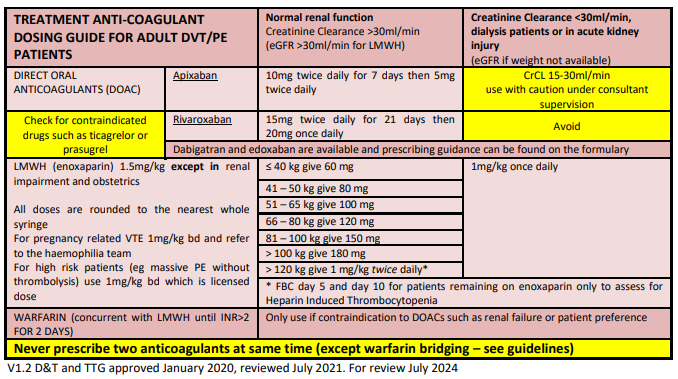
(Treatment)